
The Indian economy could remain less affected by global trade wars than other countries because the two engines of domestic growth - consumption and investment - are likely to face a limited impact from such headwinds, according to an article on the 'State of the Economy' in the Reserve Bank of India's (RBI's) bulletin, released on Tuesday.

With an expected earnings growth of 15 per cent, benchmark index Nifty 50 may hit 24,500 level by December 2024 and move further to surpass the level of 26,500 by December 2025, Emkay Investment Managers said on Tuesday. The 50-share Nifty settled at 22,888.15 on Tuesday. In the previous day, it hit a new lifetime peak of 23,110.80.

Mukesh Ambani's Jio Financial Services (JFS) is set to seek shareholders' approval for its leasing subsidiary to acquire telecom equipment and devices worth Rs 36,000 crore ($4.33 billion) from Reliance Retail. Jio Leasing Services Limited (JLSL), a wholly-owned subsidiary of JFS, plans to enter the device leasing business, and the equipment will be deployed in broadband wireless connectivity and other services.
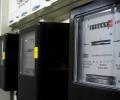
NB-IoT provides cellular-based connectivity with wide coverage and low power consumption, making it ideal for large-scale smart metering deployments.

The debt-ridden IL&FS group has discharged Rs 45,281 crore to its creditors as of March 2025, completing the resolution of its 197 entities, according to the latest status report affidavit filed before the insolvency appellate tribunal NCLAT. This is 18.9 per cent higher than Rs 38,082 crore, the amount of debt that stood resolved from the last status report filed by IL&FS six months before on October 28, 2024.

The move is to align affordable housing finance flows to the increase in property costs and inflation, says Raghu Mohan.

Breaking his silence after nine years, Vijay Mallya said he may return to India if assured a fair trial.

Mahindra & Mahindra chairman emeritus Keshub Mahindra passed away this morning in Mumbai due to old age. Mahindra, 99, breathed his last this morning at home peacefully, said a person close to the family. After joining the company in 1947, he became the chairman in 1963.

Bajaj Finance was the biggest gainer in the Sensex pack, rising 2.70 per cent, followed by Power Grid, IndusInd Bank, NTPC, Bharti Airtel, ITC, Bajaj Finserv, Infosys, Nestle, Tata Steel, Tata Consultancy Services, Titan and Axis Bank. Reliance Industries, Mahindra & Mahindra, Maruti and State Bank of India were among the laggards.

Among the 30 Sensex firms, ICICI Bank, State Bank of India, Axis Bank, Mahindra & Mahindra, Infosys, Larsen & Toubro, Tata Steel, Tata Consultancy Services, Bajaj Finance and Adani Ports were the major laggards. Asian Paints, Hindustan Unilever, UltraTech Cement, Sun Pharma and Reliance Industries were among the gainers.

From the 30-share blue-chip pack, Zomato cracked nearly 7 per cent. Power Grid, Adani Ports, Tata Steel, NTPC, Tata Motors, Tech Mahindra, Mahindra & Mahindra, Asian Paints, Sun Pharma and UltraTech Cement were the other major laggards. In contrast, Axis Bank, Hindustan Unilever, Tata Consultancy Services and IndusInd Bank were the gainers.

Large Indian IT services companies are expected to report "muted" sequential show in a traditionally strong second quarter, as macroeconomic challenges continue to weigh on global discretionary spending, say market watchers. The big earnings week for tech heavyweights is up ahead, with Tata Consultancy Services (TCS) scheduled to announce its results on October 11, and both Infosys and HCL Technologies on October 12. Wipro is slated to declare its Q2FY24 results next week, on October 18.

More screens, more films, and longer windows will convert to more people watching, assuming they know a film is releasing, points out Vanita Kohli-Khandekar.

Quarterly earnings of corporates, trading activity of foreign investors and inflation data are the key factors that are expected to drive the momentum in the equity markets this week, analysts said.

Ask rediffGURU and PF and MF expert Janak Patel your mutual fund and personal finance-related questions.

From the 30 Sensex firms, Power Grid, ICICI Bank, Bharti Airtel, HDFC Bank, Kotak Mahindra Bank, Larsen & Toubro, Adani Ports and UltraTech Cement were among the laggards. Sun Pharma, Reliance Industries, Titan, HCL Technologies and Bajaj Finserv were among the biggest gainers.

Capital market regulator Sebi on Tuesday rejected the competing open offer made by the US-based entity Danny Gaekwad Developments & Investments for acquisition of Religare Enterprises Ltd (REL) as it did not meet necessary regulations.

Equity benchmark indices Sensex and Nifty settled lower for the sixth straight session on Monday due to heavy selling in bellwether stocks including HDFC Bank and Reliance Industries amid mixed trends in the global markets and outflow of foreign funds. Falling for the sixth consecutive session, the BSE Sensex tumbled 638.45 points or 0.78 per cent to settle at 81,050. During the day, it plummeted 962.39 points or 1.17 per cent to 80,726.06. The NSE Nifty slumped 218.85 points or 0.87 per cent to end at 24,795.75.

Telecom services providers have urged the Ministry of Finance to suspend the universal service obligation (USOF) till the existing corpus is exhausted. In their Budget recommendations, they have also pressed for an exemption from the service tax on "assignment of right to use natural resources" and the slashing of Customs duty on telecom equipment to zero. The Cellular Operators Association of India (Coai), which represents private sector telecom operators Reliance Jio, Bharti Airtel, and Vodafone Idea, called for abolishment of USOF levy.

Investors lost Rs 24.69 lakh crore in market valuation in the last four days of severe drubbing in the equity market. Spike in global crude prices, unabated foreign fund outflows, a strong US jobs data diminishing early rate cut expectations, and the rupee logging its steepest single-day fall in nearly two years dampened investors' sentiment.

While a giant, it's a nimble-footed one, and is growing at a speed that even some of its private sector peers find enviable.
Between FY18 and FY24, it doubled its balance sheet. Despite being a late entrant in some segments, it has been able to grab market share, observes Tamal Bandyopadhyay.

'Selling could further intensify and take the index towards 22,800-22,750 in the near-term.'

The Securities and Exchange Board of India (Sebi) has permitted 100 per cent contribution from non-resident Indians (NRIs) and overseas citizens of India (OCIs) in the corpus of foreign portfolio investors (FPIs) based out of Gujarat International Finance Tec-City (GIFT City), the country's international financial services centre (IFSC). However, the Indian diaspora is yet to fully embrace this new route. The regulator allowed this route to enhance the fund ecosystem at GIFT City and attract genuine investments from overseas Indians.

Equity mutual funds witnessed a remarkable surge in inflows to nearly Rs 4 lakh crore in 2024, more than double the amount recorded in the preceding year, reflecting strong investor confidence and a continued shift towards long-term investing, particularly through Systematic Investment Plans (SIPs).

The combined market capitalisation of Adani group companies increased to Rs 15.11 trillion last week. As a result, Gautam Adani's family raced ahead of Mukesh Ambani of Reliance Industries, reclaiming the title of India's wealthiest promoter.

Benchmark equity indices Sensex and Nifty slumped over 1 per cent on Friday, tracking a weak trend in global markets and fresh foreign fund outflows. Falling for the third day running, the 30-share BSE Sensex tumbled 1,017.23 points or 1.24 per cent to settle at 81,183.93.

After declining to a three-year low in FY24, the private sector investment is expected to fall further in the current financial year, India Ratings said in a research note.. The investments in the private sector are likely to plummet to below 11 per cent of the GDP in FY25, based on the trends from the latest national accounts data and company fillings, it noted.

Internship opportunities have been posted by 193 companies, including Jubilant Foodworks, Maruti, Eicher Motor, L&T, Muthoot Finance and Reliance.
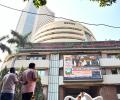
'BSE has facilitated nearly Rs 35 trillion in capital raising across multiple segments.'

'The race is now on for Indian IT firms to develop their AI prowess and focus on a software-first approach to services as the people element becomes more complicated with Trump's expected new regulations.'

Among the 30 Sensex firms, Bajaj Finance, Mahindra & Mahindra, NTPC, Power Grid, Bajaj Finserv, Bharti Airtel and Tata Consultancy Services were the biggest gainers. In contrast, Tata Motors, HDFC Bank, Reliance Industries, Tech Mahindra and ITC were among the laggards.

Rationalisation of income tax slabs, infrastructure status for digital services and incentives to hydrogen storage as well as fuel cell development were some of the suggestions made by various stakeholders at the pre-Budget consultation meeting convened by Finance Minister Nirmala Sitharaman. The customary pre-Budget consultation meetings were held with the finance minister virtually between December 15 and December 22, as per the finance ministry statement. More than 120 invitees representing seven stakeholder groups participated in eight meetings, scheduled during this period, it said.

In response to the panic triggered by Trump's trade policies, the RBI net sold approximately $43 billion in the second half of FY25 to curb volatility, as the rupee plunged to a low of 87.95 per dollar in February this year.

Among the 30-share Sensex blue-chip pack, Bharti Airtel, ITC, Kotak Mahindra Bank, Hindustan Unilever, Titan, UltraTech Cement, HCL Technologies, and Power Grid, were the biggest gainers. Tata Steel, IndusInd Bank, JSW Steel and Bajaj Finserv were the laggards.
Among the 30 Sensex firms, HCL Technologies, NTPC, Bajaj Finserv, Tech Mahindra, JSW Steel, Titan, Mahindra & Mahindra, Tata Steel, Larsen & Toubro and Tata Consultancy Services were the biggest gainers. Kotak Mahindra Bank, IndusInd Bank, Maruti and Hindustan Unilever were among the laggards.
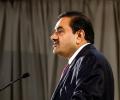
Adani Enterprises Ltd (AEL) reported an over sevenfold year-on-year (Y-o-Y) rise in its consolidated net profit, attributable to the owners of the company, for the January-March quarter of 2024-25 (Q4FY25) due to an exceptional item gain. The conglomerate's net profit was recorded at Rs 3,844.91 crore, up from Rs 450.58 crore a year ago.

With short-term rates firming up due to tight liquidity conditions, Indian corporates are opting to borrow long term to take advantage of the attractive rates by locking them in these uncertain times. The banking system has a liquidity deficit of over Rs 2 trillion. According to market participants, engineering conglomerate Larsen & Toubro (L&T) raised Rs 1,500 crore through 10-year bonds in December 2024.

IT attrition rate is expected to be around 12% to 13% this year.

India's biggest telecom players, Bharti Airtel and Reliance Industries-backed Jio Platforms, will soon bring billionaire Elon Musk-led SpaceX's Starlink satellite services to India. According to analysts, the move could boost India's tele density, especially in the rural areas, and may be an opportunity for investors to add the two stocks on dips for long-term gains

Wipro on Wednesday reported a 25.9 per cent year-on-year rise in consolidated net profit for the March quarter to Rs 3,569.6 crore, but warned of a weak quarter ahead with up to 3.5 per cent expected drop in IT services revenue for Q1FY26, amid global uncertainties. CEO and Managing Director Srini Pallia said clients remain cautious in the face of macroeconomic uncertainty.
